
Italian School of XIX Century
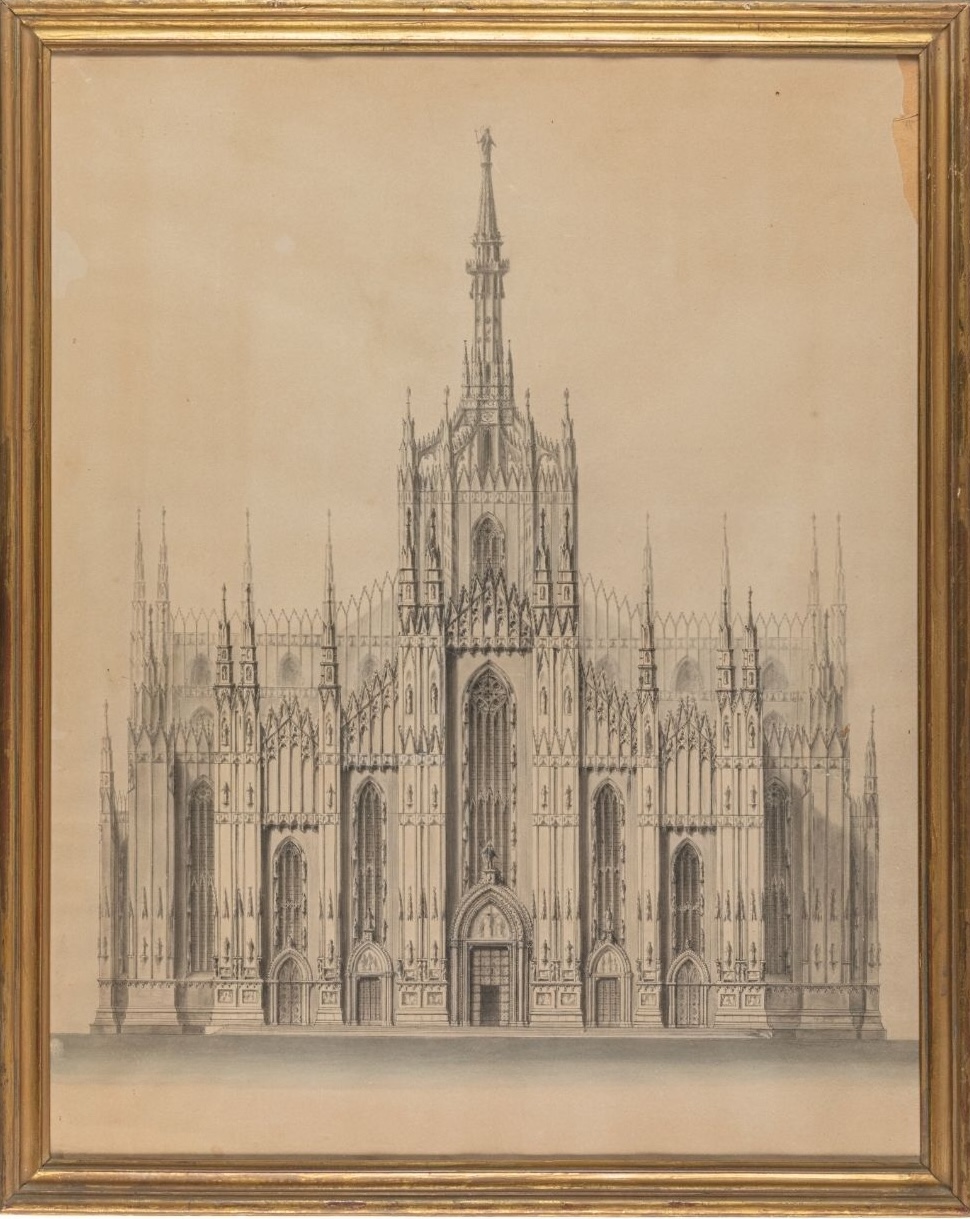
Sketch for the Duomo Façade
pencil, watercolor and ink on paper, 670 x 530 mm
This refined architectural drawing depicts a design for the façade of Milan Cathedral (the Duomo), and should be associated with the extensive debate surrounding the completion of the building throughout the nineteenth century. The work belongs within the context of the numerous competitions and studies promoted by the Veneranda Fabbrica del Duomo to determine the definitive appearance of the cathedral’s façade, which had remained unfinished for centuries and became the focus of renewed attention during the Neo-Gothic period.
The design presents a façade of rigorous Gothic conception, characterized by a dense arrangement of pinnacles, spires, flying buttresses, and pointed-arch openings, all developed according to a principle of strict symmetry. The elevation is dominated by a monumental central spire that accentuates the vertical thrust of the composition, interpreting the architectural language of the Milanese cathedral in a particularly emphatic manner.
The quality of the draughtsmanship and the precision of the details attest to the projective nature of the sheet, which was most likely intended for the formal presentation of an architectural proposal. The author demonstrates a profound understanding of the vocabulary of Lombard Gothic architecture and of the decorative peculiarities of the Duomo, reinterpreted through the historicist sensibility characteristic of the nineteenth century.
After centuries of discussion and proposed solutions, the question of the façade gained decisive momentum at the beginning of the nineteenth century when Napoleon Bonaparte, on the occasion of his coronation as King of Italy in 1805, encouraged the completion of the cathedral’s principal elevation. Nevertheless, studies, revisions, and alternative proposals continued to be produced throughout the century, reflecting the symbolic and artistic prestige that the Duomo held within European architectural culture.
Beyond its documentary significance, the drawing constitutes an important testimony to the success of the Neo-Gothic taste in Italy and to the importance attributed to architectural drawing as both a tool of design development and an idealized representation of the monument. Owing to its quality of execution and historical value, the sheet stands as a compelling record of the complex process that accompanied the completion of one of Europe’s most celebrated sacred buildings.